Raccoon Face Christmas: An Embroidery Design Review
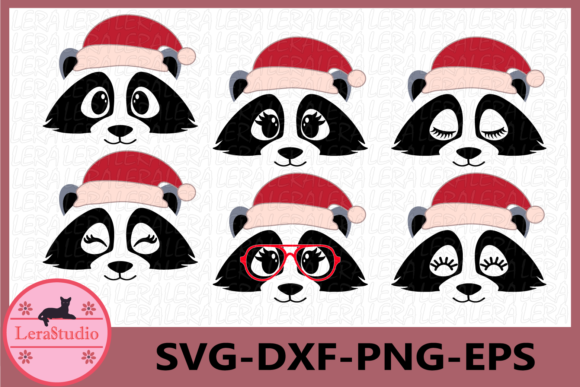
As a professional embroidery designer and product reviewer, I approach every new graphic asset with a specific question: will this actually stitch out well on real fabric? When evaluating the Raccoon Face, Christmas design package, my focus shifts immediately from digital aesthetics to tangible production value. This collection provides six individual files in SVG, DXF, EPS, AI, and PNG formats, packed in a zip archive that requires extraction before use. While these graphics are marketed as perfect for invitations and paper crafts, my assessment centers on their viability for machine embroidery projects, custom apparel, and commercial handmade products.
First Impressions and Visual Personality
The initial mood of this Raccoon Face, Christmas illustration strikes a balance between woodland whimsy and holiday tradition. The visual personality is distinct; it avoids the overly generic cartoon look that saturates the market, offering instead a stylized charm that appeals to modern crafters and Etsy sellers. For an embroidery project, the shape and layout are critical. A raccoon face naturally lends itself to circular or shield-shaped hoop placements, making it versatile for various substrates. However, because this is primarily categorized under Illustrations and Graphics rather than pre-digitized embroidery files, the success of your finished product depends entirely on how you translate these vector lines into stitch data.
The detail level appears appropriate for medium-to-large applications. The facial features likely require clean satin stitch columns for definition, while the fur texture could be interpreted through fill stitches or applique techniques. As a designer, I appreciate that the vectors are provided in AI and EPS formats, as these allow for precise node editing before digitizing. This control is essential when converting a flat graphic into a dimensional embroidered patch or sweatshirt embroidery design.
Real-World Application: Stitching a Holiday Tote Bag
To truly judge this design, I mentally walked through a recent client commission: a batch of canvas tote bags intended as holiday gifts for a local boutique. The client wanted a "woodland winter" theme that felt upscale yet approachable. The Raccoon Face, Christmas graphic was a strong contender for this custom apparel and accessory line.
In this scenario, the design serves as the focal point of the tote bag. Canvas is a forgiving fabric texture, but it demands proper stabilizer to prevent puckering during high-density stitching. Because the source files are vectors, I could scale the raccoon face to fit a 5x7 hoop without losing edge clarity. For this specific handmade product, I envisioned using a cream-colored thread for the face against a forest green canvas bag. This contrast ensures the running stitch outlines pop, while the festive elements—perhaps a Santa hat or holly accent included in the set—could utilize metallic threads to elevate the perceived value.
For small business owners and makers, this application demonstrates the design's commercial potential. It transforms a standard utility item into a personalized gift with boutique appeal. However, achieving this result requires treating the graphic as a blueprint for digitizing, not a ready-to-stitch file. You must verify stitch density and underlay settings specifically for canvas weight to ensure the final embroidered patch feels professional and durable.
Critical Considerations for Fabric and Hoop Selection
While the Raccoon Face, Christmas design has strong aesthetic merit, it requires careful handling in specific embroidery situations. Not all fabrics are created equal, and vector graphics do not account for material physics.
- Stretchy Fabrics: If applying this design to baby clothes or lightweight knit sweatshirts, you must adjust your digitizing strategy. Knits stretch; vectors do not. Without adequate underlay and a cut-away stabilizer, the raccoon’s facial proportions may distort after washing. Test on scrap fabric identical to your garment before committing to a full production run.
- Small Hoop Sizes: Reducing complex illustrations to fit 4x4 hoops can compromise clarity. Tiny lettering or intricate fur details may turn into a muddy blob of thread. If you plan to use this for baby embroidery or cap designs, simplify the vector nodes first. Remove unnecessary internal details that cannot be rendered clearly at small scales.
- Dark vs. Light Fabrics: Always test your digital embroidery file mockups in both black and white. A design that looks vibrant on white cotton may disappear on navy fleece. You may need to add a white underlay base or adjust thread colors to maintain visibility on dark backgrounds.
- Curved Surfaces: Caps and curved sleeves present unique challenges. The flat geometry of a raccoon face may need warping or segmentation to stitch correctly on a curved surface without registration errors.
Impact on Product Value and Brand Consistency
Using high-quality graphics like Raccoon Face, Christmas directly influences customer trust and buyer engagement. In the competitive landscape of Etsy sellers and craft fair vendors, sloppy digitizing or poor fabric choices signal amateurism. Conversely, a crisp, well-executed embroidery project communicates professionalism.
This design supports brand consistency for shops focusing on nature-inspired or holiday themes. By utilizing the same stylistic graphics across printable mockups, social media previews, and actual finished products, you create a cohesive visual identity. The inclusion of PNG files is particularly useful here; they allow you to create accurate digital product previews and listing photos before you ever thread a needle. This saves time and materials while helping customers visualize the final personalized gift.
Furthermore, the versatility of having six individual files means you can create coordinated collections. Use the full face for sweatshirt embroidery, a simplified icon for tags or labels, and the detailed version for framed nursery decor. This maximizes the return on your design assets and offers customers variety within a consistent theme.
Essential Designer Notes for Successful Execution
Before adding Raccoon Face, Christmas to your commercial embroidery lineup or personal craft queue, adhere to these practical guidelines:
- Verify Licensing: Confirm whether your purchase includes commercial rights for selling finished physical products versus digital embroidery files. These are often separate licenses.
- Digitize with Intent: Do not rely on auto-digitizing software alone. Manually assign stitch types. Use satin stitch for borders and eyes, fill stitch for larger areas, and running stitch for fine details to preserve the illustration's character.
- Stabilizer Matching: Match your stabilizer to the fabric weight and stitch density. Heavy fill areas on light fabric require robust support to prevent tunneling.
- Thread Color Testing: Physical thread colors differ from screen RGB values. Create a color chart test stitch-out to ensure the holiday palette matches your vision.
- Wash Testing: If selling baby items or kitchen towels, wash and dry a test sample. Ensure the design holds up to frequent laundering without excessive shrinkage or thread breakage.
- File Management: Remember to extract the zip archive completely before importing into your digitizing software. Keep original AI/EPS files organized for future resizing or modification needs.
Ultimately, Raccoon Face, Christmas offers a charming foundation for holiday embroidery projects, provided it is treated with technical respect. Its strength lies in its clean vector lines and seasonal appeal, making it suitable for everything from custom apparel to boutique merchandise. By combining thoughtful digitizing with appropriate material choices, crafters and entrepreneurs can transform these digital illustrations into high-value, tactile products that resonate with buyers and stand the test of time.